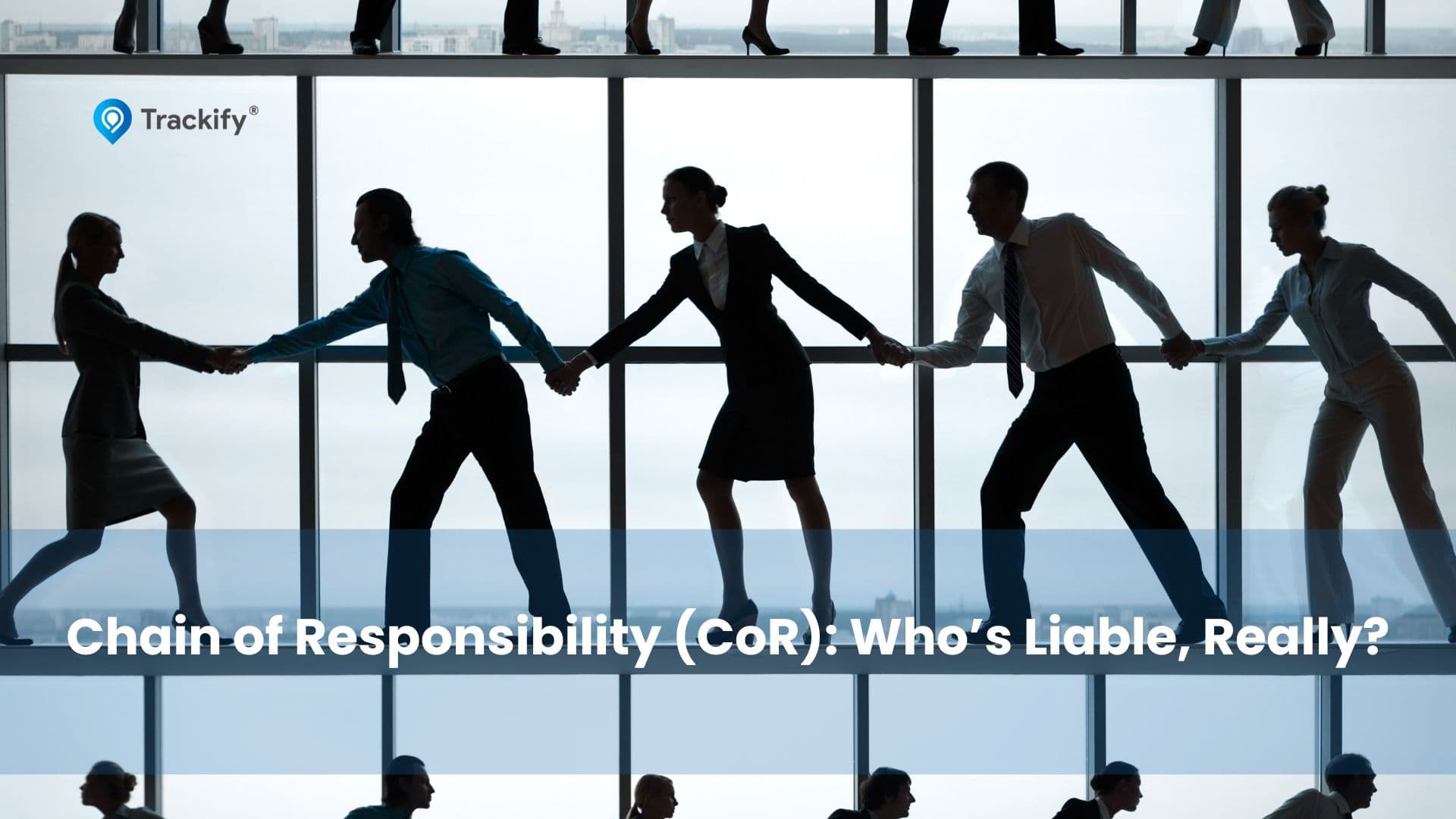
Chain of Responsibility (CoR): Who’s Liable, Really?
Responsibility is Shared — So Should Be the Tools
In Australia’s heavy vehicle industry, responsibility doesn’t stop at the driver. Under Chain of Responsibility (CoR) laws, anyone who influences transport activities can be held legally accountable for safety breaches. That includes operators, schedulers, consignors, consignees, loaders — and more.
But who’s truly liable? And how can your team stay aligned and protected from penalties?
Let’s break it down.
⚖️ What Is the Chain of Responsibility?
The Chain of Responsibility is a legal framework under the Heavy Vehicle National Law (HVNL) that ensures everyone in the transport supply chain shares responsibility for safety and compliance.
That means if you influence a driver’s behaviour, working hours, or load — you may share legal liability for what happens on the road.
🧍♂️ Who’s Liable Under Chain of Responsibility?
Here are some key roles — and how they could be found liable:
- Operators – Must ensure vehicles are roadworthy and drivers are fit and properly trained.
- Schedulers – Can’t demand unrealistic delivery times that cause drivers to speed or skip breaks.
- Loaders & Packers – Must ensure loads are properly restrained and within mass limits.
- Consignors/Consignees – Can’t request or accept deliveries under unsafe or illegal conditions.
- Employers & Contractors – Must provide CoR training and enforce safety policies.
Even if you’re not physically in the truck, your decisions and actions matter.
🚨 What Are the Penalties for Non-Compliance?
CoR breaches can result in serious consequences including:
- Fines up to $300,000 for individuals and $3 million for corporations
- Criminal charges in cases of recklessness or negligence
- Loss of business licences or reputational damage
- Audit failures or enforcement notices from NHVR and WAHVA
✅ How Trackify Helps You Manage Chain of Responsibility
With so many people involved in the chain, staying compliant can feel complex. Trackify makes it simpler with:
🔹 Role-Based Access – Assign responsibilities across your team and track actions by user
🔹 Digital Checklists – Ensure safety protocols and loading procedures are followed
🔹 Fatigue & Scheduling Tools – Reduce pressure on drivers to meet unsafe deadlines
🔹 Messaging & Records – Keep a documented trail of communications and safety instructions
🔹 Audit-Ready Reports – Prepare for spot checks or NHVR investigations with exportable logs
💡 Real-World Example:
A scheduler unknowingly allocates a route that requires unrealistic timing. The driver, pressured to meet the schedule, skips required rest and crashes. Under CoR, both the driver and the scheduler could be held accountable — unless clear steps were taken to prevent the breach.
With a digital compliance platform like Trackify, such risks can be flagged early — protecting your team and your business.
Compliance isn’t just a driver’s duty. It’s a shared responsibility across your team. Equip your business with the right digital systems, provide proper training, and document every step. That’s how you stay protected under Chain of Responsibility laws.
Get CoR peace of mind with Trackify — stay compliant, stay confident.
👉 trackify.com.au